
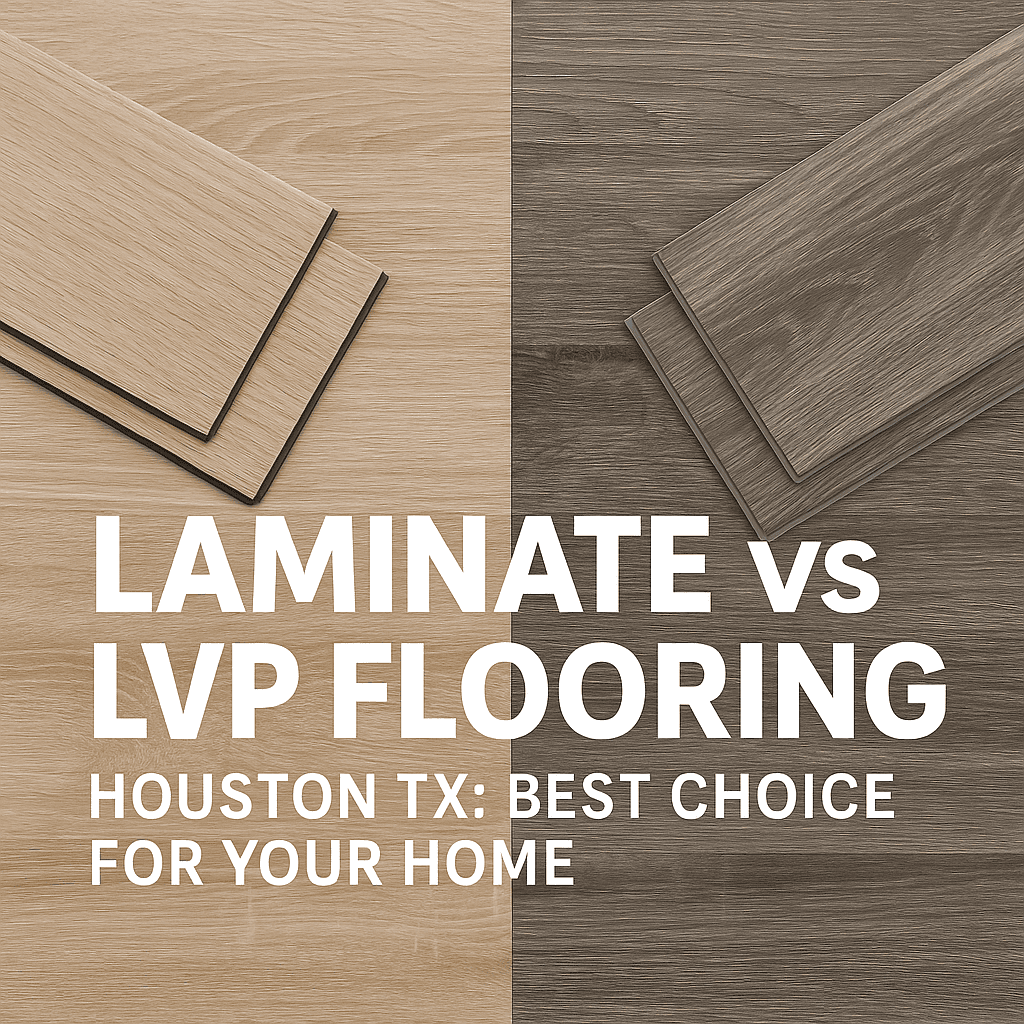
Laminate vs LVP flooring Houston TX homeowners are considering has become one of the most common conversations in the local flooring industry. Whether you’re renovating a suburban home in The Woodlands or updating a downtown condo near Midtown, choosing the right flooring material can significantly impact your home’s comfort, durability, and resale value. Both laminate and luxury vinyl plank (LVP) have surged in popularity as affordable alternatives to hardwood, but they are not interchangeable — especially in a city like Houston where heat, humidity, and flooding are real concerns.
Understanding the Basics: What Is Laminate and What Is LVP?
Before diving into the comparison, it helps to understand what each product actually is.
Laminate flooring is made from a compressed wood fiberboard core topped with a photographic image layer and a clear wear layer. It looks remarkably like real hardwood and feels solid underfoot, but its core is made from wood-based materials that are susceptible to moisture damage.
Luxury Vinyl Plank (LVP) is made entirely from synthetic materials, primarily PVC. It mimics the look of hardwood through embossed textures and printed layers but is 100% waterproof from top to bottom. LVP has become one of the fastest-growing flooring categories in the country — and for good reason.
Laminate vs LVP Flooring Houston TX: How Climate Affects Your Decision
Houston’s climate is notoriously hot and humid. The city sees average humidity levels that hover around 75–80% throughout much of the year, and flooding from tropical storms and heavy rainfall is a documented risk in many neighborhoods.
This environmental reality plays a massive role in the laminate vs vinyl plank Houston debate. Laminate flooring can warp, swell, and buckle when exposed to moisture. If water seeps under the boards or sits on the surface for too long, the wood fiberboard core can break down permanently. For homes in flood-prone areas like Meyerland, Kingwood, or parts of Sugar Land, laminate can be a costly gamble.
LVP, on the other hand, is completely waterproof. It can be installed in bathrooms, laundry rooms, basements, and kitchens without worry. If Houston experiences another major flood event, LVP floors may survive with a simple dry-out and cleaning, while laminate typically needs to be replaced entirely.
Durability and Foot Traffic
Both laminate and LVP are durable options for busy households, but they wear differently over time.
Laminate tends to have a harder surface that resists scratches well, making it a solid choice for homes with dogs or heavy furniture. However, once the wear layer is penetrated, the floor can be difficult to repair. Individual planks can be replaced in some cases, but matching old planks to new ones is often a challenge.
LVP is softer underfoot and slightly more resilient to impact, meaning it’s less likely to chip or crack if something heavy is dropped on it. The wear layer on high-quality LVP (measured in mils) determines its longevity. For residential Houston homes, a 12–20 mil wear layer is typically recommended, while commercial spaces should look for 20 mil or higher.
Cost Comparison in the Houston Market
When evaluating laminate vs vinyl plank Houston pricing, both options are generally affordable compared to hardwood or tile. Laminate typically ranges from $1.50 to $4.00 per square foot for materials, while LVP ranges from $2.00 to $5.00 per square foot. Installation costs in Houston tend to run between $1.50 and $3.00 per square foot depending on subfloor prep and room complexity.
Given that LVP eliminates the need for moisture barriers in most cases and holds up better over time in Houston’s environment, many homeowners find the slightly higher upfront cost pays off in long-term savings.
Comfort, Sound, and Feel Underfoot
Laminate flooring tends to feel harder and can sound hollow or clickety when walked on, especially if the subfloor isn’t perfectly level. Many laminate products come with attached underlayment to help reduce this.
LVP is thicker in its premium form and provides a softer, more cushioned feel. It also tends to be quieter underfoot, which is a significant quality-of-life factor in multi-story homes or open-concept living spaces common throughout Houston’s newer neighborhoods.
Which Is Better for Houston Homes?
For most Houston homeowners, LVP is the stronger choice. Its waterproof nature, resilience in high humidity, and ability to withstand the occasional flooding event make it far better suited to the Gulf Coast environment. It’s also growing in demand among real estate agents and home buyers who recognize its durability.
That said, laminate still has a place. If your home is in a low-humidity, elevated area and your budget is tight, laminate can provide beautiful aesthetics at a lower price point. Just be sure to keep it away from moisture-prone areas.
Tips for Choosing the Right Product in Houston
– Always check the AC rating (Abrasion Class) on laminate or the mil thickness on LVP before purchasing.
– Visit local Houston flooring showrooms to see samples in person — colors and textures vary widely between brands.
– Ask your installer about subfloor moisture testing before installation.
– Look for products with attached underlayment to save installation time and cost.
– Consider your neighborhood’s flood risk when making the final decision.
Ultimately, the choice between laminate and LVP comes down to your specific living situation, budget, and risk tolerance. Houston’s environment strongly favors waterproof flooring, and LVP delivers that protection without sacrificing style or affordability. Work with a trusted local Houston flooring professional to evaluate your subfloor conditions, room usage, and long-term goals before making your final selection.
Ready to transform your Houston home? Contact She Builds All Home Remodeling today for a free consultation. Call us at 832-669-4445 or visit shebuildsall.com to get started. Our woman-owned team proudly serves Houston, Katy, Cypress, Sugar Land, The Woodlands, Pearland, Spring, and surrounding areas.